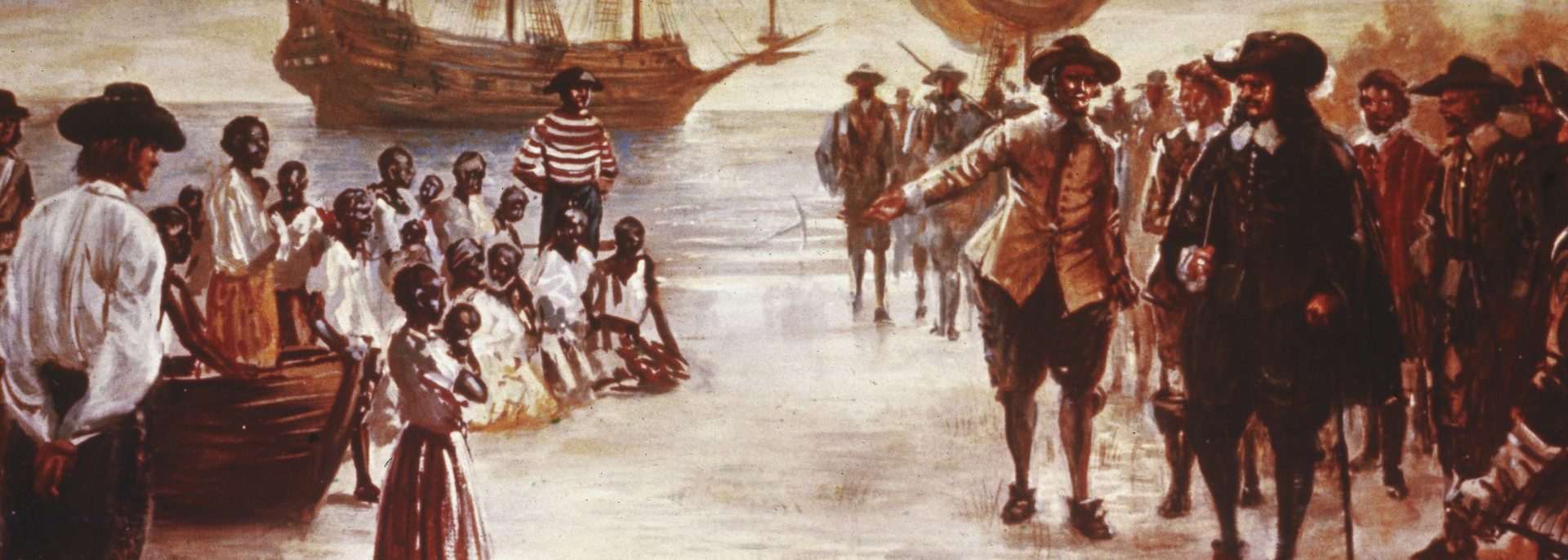


This term our topic is “Maafa”. Throughout this topic, we will learn about Africa today and the ancient kingdoms that thrived on the continent for thousands of years. We will learn about the origins of the transatlantic slave trade in the 15th century and Britain’s involvement from the time of Elizabeth I, when John Hawkins became the first British slave trader. Your child will understand the structure of the transatlantic slave trade and the consequences of enslavement for enslaved people. We will also discover how the people of Britain benefited from the money and goods produced by the slave trade. We will learn about the causes and consequences of the abolition of slavery in the 19th century, the worldwide African diaspora and the European colonisation in Africa. We will explore the lives and actions of black people in 20th century Britain. We will understand how the Race Relations Act of 1965 became the first piece of British legislation to tackle racial discrimination and know that the Equality Act 2010 provides people with protection against racism and other forms of discrimination, today.
To find out more, view our Maafa Knowledge Organiser.

Our Changing World
During the Our Changing World project, we will revise the features of the Earth and learn more about time zones. We will recall how to use lines of latitude and longitude to pinpoint places on a world map and learn about map scale. We will measure distances on a map and revisit grid references, contour lines and map symbols. We will learn about global warming and climate change and discover how climate change and extreme weather affect people worldwide. We will learn about global trade and find out about the export of manufactured goods, food or natural resources. We will analyse recent road traffic accident figures and carry out fieldwork to find out about the safety of a local road. We will study patterns of human settlements and carry out a fieldwork investigation to describe local settlement patterns. To find out more, view Our Changing World knowledge Organiser.
Other helpful documents
Investigating Our World
During the Investigating Our World project, we will study Ordnance Survey maps to write a description of the local area. We will learn about contour lines and revise six-figure grid references to locate features on maps. Your child will learn about the Prime, or Greenwich, Meridian and find out that Greenwich Mean Time, or GMT, is taken from the Prime Meridian. We will know that the Earth is split into 24 time zones and calculate the time in places worldwide. Your child will learn about climate zones, vegetation belts and biomes. We will find out that the climate and vegetation in an area determine the animals that live there. Your child will learn about the human geography of the continents and locate capital cities around the world. We will identify relative locations and use the scale bars on maps to find the distance between places. They will study the motorway network across the United Kingdom, learning how they connect towns, cities and transport links across the country. Your child will explore a settlement hierarchy diagram and learn about the relative size, significance and populations of settlements. At the end of the project, we will carry out a fieldwork enquiry to discover which settlement types are in their local area. To find out more, view Investigating Our Changing World Knowledge Organiser.
Other helpful documents
Investigating Our World Glossary
From a historical perspective, we will learn about ancient African kingdoms; development of the transatlantic slave trade; Britain's role in the slave trade; human impact; everyday life on plantations; rebellion and marronage; causes and consequences of the abolition of the slave trade and slavery; colonisation of Africa; black people in 20th century Britain; Race Relations Act; Equality Act; and multiculturalism.

Reading
Our Class Text and Comprehension
In term 1 and 2, our reading comprehension lessons will be based upon our class text, “Freedom” by Catherine Johnson. The story is based around an enslaved Jamaican boy is separated from his family and taken to work in England. His owners, the Barratts, treat him cruelly, but he is determined to escape and earn the money needed to buy his family’s freedom. While in London, he attends the Zong slave ship’s court hearing and learns about the horrors that took place on board.
To find out more about this text, view our Freedom Novel Knowledge Organiser.
We will also focus on poetry during term 2. In particular analysing and evaluating the use of language, including figurative language and how it is used for effect, using technical terminology such as metaphor, simile, analogy, imagery and style. We will also explain feelings or emotions brought about by a poet’s choice of words. In addition to this, children will be encouraged to independently justify inferences from poems, using more than one piece of evidence. These poems will include, “The Bonfire at Night” by Enid Blyton, “In Flanders Fields” by John McCrae, “Twas the Night Before Christmas” by Clement Clarke Moore.
For further information about the reading skills we will focus upon this term, please view “Churchill’s Sequential Reading Curriculum”
Independent Reading
In class, we will continue to use the Accelerated Reader program. For further information about this, please view a Parent's Guide to Accelerated Reader. (https://help.renlearn.co.uk/AR/ARParentGuide) If you need your child's AR password, please contact me (Mrs Saunders).
Writing
Over the course of the autumn term, we will be writing and creating two non-chronological reports, a newspaper report, a persuasive letter, a biography, and a range of poetry including a narrative poem, a Kenning poem and an acrostic poem.
Firstly, we will create a newspaper report about the Amistad mutiny. Writing a newspaper report encourages children to write impartially in a formal style. It also challenges them to proofread their work as if it were going to print. Children could include specific details and link their information with cohesive devices. Concise noun phrases and a correctly punctuated quotation could also be included.
Having learnt about the abolition of slavery, we will then write persuasive letters to stop colonisation. Writing a persuasive letter challenges the children to use a variety of techniques to add interest and clarity when persuading the reader. Children could use a formal style that includes both facts and opinion. They could use cohesive devices to build their case and proofread their letter for accuracy of grammar, spelling and punctuation.
Over the course of the autumn term, we will write two non-chronological reports: firstly about “Africa Today” and secondly about “The Windrush scandal. Writing a non-chronological report, challenges children to research and make detailed notes about their subject matter. Children could use different sources, such as the websites, to increase their knowledge and check their facts. They could summarise the main ideas that they wish to include in their reports. The report could be written in a formal style with appropriate verb forms. A range of organisational devices could help the reader to find information quickly.
Children will choose an inspirational black Briton, research their life and achievements and create a biographical report that explains the impact that they had on life in Britain and beyond.
In addition to focusing upon poetry within our reading, we will also focus upon poetry in our writing. Throughout this, we will create an acrostic, a narrative and a Kenning poem. Writing poetry encourages children to use dictionaries and thesauri as they look for specific vocabulary. Including figurative language, particularly imagery, helps them focus on their senses as they create new and interesting descriptions. Children could assess the effectiveness of their poems, make edits and improvements, then perform them using appropriate intonation, volume and movement.
For further information about the writing skills, we will focus upon this term, please view “Churchill’s Sequential Writing Curriculum”
Grammar, Punctuation and Spelling
Punctuation
This term, we will use a colon to introduce a list; discuss and use commas, semi-colons and colons to separate clauses effectively; discuss idea of ambiguity, when meaning is not clear; model and practise punctuating parenthesis, using pairs of commas, dashes or brackets; identify ellipsis in texts, edit deliberate punctuation errors revise word class, including pronouns, prepositions and determiners; strengthen and improve verbs in writing; write formal and informal sentences, selecting conjunctions and cohesive devices to suit level of formality; and compare sentences in simple past with perfect past verb form.
Grammar
This term, we will learn about types of nouns; relative clauses; modal verbs; revise four types of sentences; identify synonyms and antonyms and possessive pronouns.
Spellings
During our spelling lessons in term 1 and 2, we will revise the “i” sound spelt “y” other than at the end of words; learn words ending in -able and -ible; -ably and –ibly; add suffixes beginning with vowel letters to words ending in - “fer”; examine the use of the hyphen (to spell words); revise sound spelt “ou”; revise the letter string “ure”; revise the suffix “sion”; revise words ending “gue” and “que”; revise words with the “ei” sound spelt “ei,” “eigh,” or “ey”; spell endings spelt “cious” or “tious”; and spell homophones and other words that are often confused
For an overview of our weekly breakdown of our spellings, please view our Term 1 and Term 2 Homework Grid.
In addition to these weekly spelling rules, we will continue to learn and spell words from the Year 5 and 6 statutory spelling list. For an overview of these spellings, please view the Spelling word list for Year 5 and Year 6
Following the White Rose Maths scheme, year 6 will cover six main blocks of learning over the course of the spring term: ratio; algebra; decimals; fractions, decimals and percentages; perimeter, area and volume; and statistics. The blocks of learning for ratio and algebra have been moved to earlier in the year to give more time to consolidate these new concepts. As part of the White Rose Maths scheme, each block is broken down into a series of small learning steps. Combined, these small learning steps then cover all the curriculum content your child needs to know in small related chunks.
This term’s small learning steps for each block
| Maths area of learning | Block | Small Learning Steps |
| Number | Place Value | Numbers to 1,000,000; numbers to 10,000,000; read and write numbers to 10,000,000; powers of 10; number line to 10,000,000; compare and order any integers; round any integer; and negative numbers. |
| Number | Addition, subtraction, multiplication and division | Add and subtract integers; common factors; common multiples; rules of divisibility; primes to 100; square and cube numbers; multiply up to a 4-digit number by a 2-digit number; solve problems with multiplication; short division; division using factors; introduction to long division; long division with remainders; solve problems with division; solve multi-step problems; order of operations; and mental calculations and estimation. |
| Number | Fractions A | Equivalent fractions and simplifying; equivalent fractions on a number line; compare and order (denominator); compare and order (numerator); add and subtract simple fractions; add and subtract any two fractions; add mixed numbers; subtract mixed numbers; and multi-step problems. |
| Number | Fractions B | Multiply fractions by integers; multiply fractions by fractions; divide a fraction by an integer; divide any fraction by an integer; mixed questions with fractions; fraction of an amount; and fraction of an amount – find the whole. |
One of the most important things for your child to have mastered and maintain is their knowledge of times tables. For an overview of our weekly times tables focus, please view our Term 1 and Term 2 Homework Grid. To complement their work in lessons reinforcing their fluency, recall and commutativity of these timetables, your child will be set a weekly activity to complete as part of their homework on Sumdog.
Our Calculation Policy: addition and subtraction
Our Calculation Policy: multiplication and division

This term our topic is “Circulatory system”. In the Circulatory system project, your child will revisit prior learning about the systems in the human body and the seven life processes. They will explore the role of the circulatory system and its main parts, carrying out research to answer their own questions. They will look closely at the structure, functions and features of the heart. They will learn about the components and functions of blood, making a representation of a separated blood sample. They will draw and label diagrams of each type of blood vessel and learn about their structure and function. They will test their resting heart rate using a variety of methods. They will investigate whether having a lower resting heart rate means you can sprint faster. They will recap the four types of exercise and test which raise their heart rate the most. They will recap what they know about healthy eating and the Eatwell guide, exploring foods that fall outside the Eatwell plate and recommended daily amounts of foods. They will research the effects of smoking, alcohol and drugs on the human body. They will complete their learning by carrying out an investigation into heart rate recovery. To find out more, view our Circulatory System Knowledge Organiser.
Circulatory System Lesson Overview
| Lesson | Learning focus |
| 1 | Bodily systems |
| 2 | Role of the circulatory system |
| 3 | Structure and function of the heart |
| 4 | The function of blood |
| 5 | The structure and function of blood vessels |
| 6 | Measuring heart rate |
| 7 | Proving a hypothesis |
| 8 | Heart rate investigation |
| 9 | Classifying foods |
| 10, 11,12, 13, 14 | Let's investigate focus: Reporting and concluding |
| 15 | Assessment |
Other helpful documents:
Art: Tints, Tones and Shades
Our art topic for this term is “Tints, Tones and Shades”. Throughout this topic, we will learn about colour theory by studying the colour wheel and exploring mixing tints, shades and tones. We will learn about significant landscape artworks and features of landscapes before using this knowledge to create landscape paintings. To find out more, view our Tints, Tones and Shades Knowledge Organiser.
Art: Trailblazers and Barrier Breakers
Linked to our Maafa topic, this project teaches children about significant black artists and their work and provides opportunities to analyse and create artwork inspired by them. To find out more, view our Trailblazers and Barrier Breakers Knowledge Organiser.
Design and Technology: Food for Life
Our Design and Technology topic for this term is “Food for Life”, Over the course of this food technology project, we will learn about processed food and healthy food choices. We will make bread and pasta sauces and learn about the benefits of whole foods. We will plan and make meals as part of a healthy daily menu and evaluate our completed products. To find out more, view our Food for Life Knowledge Organiser.

In computing this term, we will study the following three units: blogging, networks and graphing
Blogging Overview
This unit allows children to explore blogs and their features, including how they can be used to engage an audience effectively. Children will plan and create their own blog post as well as commenting on other's blog posts.
Key Learning
- To understand blogs and their features.
- To plan the theme, content and structure for a blog post.
- To write and style a blog post.
- To review and comment on blog posts with an understanding of online safety.
For further information please see our Blogging Knowledge Organiser
Networks Overview
This unit allows children to learn more about what networks are, what they do and how they connect devices. Children also consider the safety aspects of networks, including the possible positive and negatives uses of networks.
Key Learning
- To understand what a computer network is and identify examples of networks at home, school and in the wider world.
- To understand the difference between the internet and the World Wide Web and explore the services they provide.
- To explore how the internet can be used for communication and collaboration, and how to do this safely and respectfully.
- To explore who is in charge of the internet and how rules and website blocking can affect people, society and online platforms.
For further information please see our Networks Knowledge Organiser
Graphing Overview
This unit explores the benefits of creating common graph types, digitally. Children will create a range of familiar graph types using the 2Graph and 2Calculate tools, exploring features that make it easy to present data in the best possible way.
Key Learning
- To create comparative bar charts using graphing software.
- To create pie charts using graphing software.
- To create line graphs using graphing software.
- To present data in graphs to support an argument.
For further information please see our Graphing Knowledge Organiser
Our Religious Education lessons will continue to be based upon our “Love to Celebrate” projects. Basing the “Love to Celebrate” projects around festivals, gives a real-life context to the children’s learning and a structure to the projects. However, the celebration itself is only a small part of each “Love to Celebrate” project. Each set of projects covers all major aspects of each religion including worship, belief, leadership and belonging.
Please view our “World festivals and Celebrations Calendar”.
Term 1: Judaism – Rosh Hashanah and Yom Kippur
Rosh Hashanah is the Jewish New Year, and it begins with the sound of a shofar (ram's horn). Sweet foods are eaten in the hope of a sweet New Year and the ritual of Tashlich is performed. The Days of Repentance follow, when Jews think back over the past year and make amends for their sins.
Yom Kippur, the holiest day in the Jewish calendar, is known as the Day of Atonement. It is celebrated 10 days after Rosh Hashanah and ends when a shofar is heard. These high holy days are a time to right wrongs, reflect upon the previous year, fast and visit the synagogue. The key themes we will consider and examine are: Exploring forgiveness; New Year;repentance; and forgiveness. For the key words and vocabulary associated with this topic, please view our “Rosh Hashanah and Yom Kippur Glossary”.
Term 2 Sikhism – Bandi Chhor Divas
The Sikh celebration of Bandi Chhor Divas coincides with the Hindu festival of Diwali. During the festival, Sikhs celebrate Guru Hargobind, who released 52 Hindu princes from Gwalior Fort in 1619. The main themes of the festival are religious freedom and helping others who are weaker or in need. During the celebrations, Gurdwaras are lit with electric lights and candles as a reminder that the Golden Temple in Amritsar was lit to welcome Guru Hargobind home after he left for Gwalior Fort. There may also be a Nagar Kirtan, a parade of the Guru Granth Sahib and gatka martial arts displays as well as Akhand Path, a continuous reading of the whole Guru Granth Sahib, which takes two days and nights. Many Gurdwaras also hold a firework display in the evening. The use of lights during Bandi Chhor Divas seems similar to the Hindu festival of Diwali but the stories celebrated during the two festivals are different. The key themes we will consider and examine are: Thinking about defence; Guru Hargobind; Leadership; Freedom; and Defence. For the key words and vocabulary associated with this topic, please view our “Bandi Chhor Divas Glossary”.

Over the course of term 1 and 2, we will follow our Jigsaw PSHE scheme of learning. Jigsaw, the mindful approach to PSHE is a progressive and spiral scheme of learning. In planning the lessons, Jigsaw PSHE ensures that learning from previous years is revisited and extended, adding new concepts, knowledge and skills, year on year as appropriate.
For more information regarding the knowledge and skills progression, please view the Jigsaw Knowledge Skills and Progression Document for ages 10-11.
Term 1: Being Me In My World
In this Puzzle, we will identify goals for the year; learn about being a global citizenship; children’s universal rights; feeling welcome and valued; choices, consequences and rewards; group dynamics; democracy - having a voice; anti-social behaviour; and role-modelling.
Term 2: Changing Me
In this Puzzle, we will learn about perceptions of normality; understanding disability; power struggles; understanding bullying; inclusion/exclusion; differences as conflict, difference as celebration; and empathy.

Following the GetSet4PE scheme of learning, our Physical Education (PE) lessons for term 1 will focus on Health Related Fitness and tag rugby. Our PE lessons for term 2 will focus on indoor athletics and hockey. Our PE lessons will be on Tuesdays and Friday; children can wear their PE into school on both of these days.
Term 1: Invasion Games (Rugby)
In their tag rugby lessons, pupils develop their understanding of the attacking and defending principles of invasion games. Pupils will have to think about how they use skills, strategies and tactics to outwit the opposition. They do this by maintaining possession and moving the ball towards the try line to score.
Term 1: Health Related Fitness
Pupils will take part in a range of activities that explore and develop different areas of their health and fitness. They will be given opportunities to work at their maximum and improve their fitness levels, recognising how the activities make them feel. They will need to persevere when they get tired or when they find a challenge hard and are encouraged to support others to do the same. Pupils are asked to recognise areas for improvement and suggest activities that they could do to do this, while always working safely and with control.
Term 2: Sports Hall Athletics
Throughout these lessons, pupils will develop basic running, jumping and throwing techniques. They are set challenges for distance and time that involve using different styles and combinations of running, jumping and throwing. As in all athletic activities, pupils think about how to achieve their greatest possible speed, distance or accuracy and learn how to persevere to achieve their personal best.
Term 2: Invasion Games (Hockey)
In hockey lessons, pupils develop their understanding of the attacking and defending principles of invasion games. They will learn to do this by maintaining possession and moving the ball towards the goal to score. Pupils will also develop their understanding of the importance of fair play and honesty while self-managing games and learning and abiding by key rules, as well as evaluating their own and others’ performances.
To find out more, view our GetSet4PE Knowledge Organisers

Term 1: Hey Mr Miller
Hey, Mr Miller is an extremely popular song with three layers in a jazz/swing style. The title and song lyrics refer to the well-known American musician Alton Glenn Miller and his swing band. As well as opportunities to discover and learn about swing-style jazz and some of the most renowned big band leaders of 1930s and 1940s America, the activities in this unit will allow children to explore rhythm work, creating and improvising off-beat (syncopated) rhythm patterns and melodies, and develop a polished group performance. This unit also contains the first of three progression snapshots that will be returned to and developed in Terms 2 and 3 to collect evidence of pupils’ progress.
- Lesson 1: Introduction and begin learning Hey, Mr Miller.
- Lesson 2: Learn Section 3 Hey, Mr Miller and find out about swing music.
- Lesson 3: Progression snapshot 1. Make a video recording of children singing.
- Lesson 4: Learn about scat singing and swing rhythms with Ella Fitzgerald and Duke Ellington.
- Lesson 5: Improvise syncopated melodies using notes of the C major scale.
- Lesson 6: Sing and play a class arrangement with a good sense of ensemble.
Term 2: Shadows
This listening unit is based around the piece Shadows by Lindsey Stirling – an American violinist and dancer. As an artist, she creates music that is a fusion of country, electronic dance music (EDM), and rock. There are lots of video examples to watch with focused questions to guide listening and base discussions around. Tokio Myers is also included in this unit as an artist who found fame on the TV programme Britain’s Got Talent. He studied classical piano at the Royal College of Music and uses his talents to create music that fuses many different genres. The unit ends with a creative response to music using shadows.
- Lesson 1: Who is Lindsey Stirling?
- Lesson 2: Who is Tokio Myers?
- Lesson 3: Create a response to music using shadows.
Term 2: Music for Protests
English composer Ethel Smyth used music to put across the message of the suffragettes when she wrote their March of the women anthem. In this unit, children will learn how to make their own protest song inspired by Ethel’s anthem and the suffragette movement.
- Lesson 1: Protest words.
- Lesson 2: Protest song.
- Lesson 3: Protest!
For more information, please view our Charanga musical school year 6 knowledge organisers

We are delighted to continue our French lessons with Mrs Cackett, our resident native French speaker.
Over the course of the Autumn term, we will be learning about:
- Telling the time in French
- Our school and French schools
- Places on our school
- School times and school subjects
- School timetable
Throughout these lessons, we will practise speaking, listening, reading and writing in French.
| Churchill Class Term 1 and 2 Resources |
| Title |
|---|