
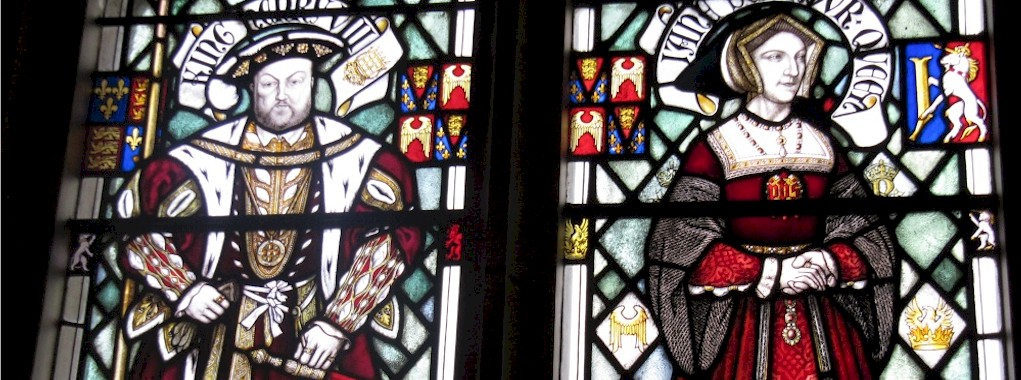

This term our topic is “Movers and Shakers”. Throughout this topic, we will learn about significant people from the past and how they have changed the views of people in the modern day.
Other helpful documents
Movers and Shakers Home Learning Tasks
Movers and Shakers Vocabulary Mat
(Please refer to the Downloadable Resources Page for PDF copies of all highlighted/underlined documents)

In our 'Let's Explore the World' unit, this essential skills and knowledge project teaches children about atlases, maps and cardinal compass points. They learn about the characteristics of the four countries of the United Kingdom and find out why there are hot, temperate and cold places around the world. They also compare England to Somalia. Children carry out fieldwork, collecting primary data in their locality to answer geographical questions.
.
This project teaches children about historically significant people who have had a major impact on the world. They will learn to use timelines, stories and historical sources to find out about the people featured and use historical models to explore their significance. Significant people we will learn about are: Rosa Parks; Henry VIII, Martin Luther King; Neil Armstrong and many more.

Reading
Our Class Text and Comprehension
Over the course of both terms, we will be exploring and reading “Little People, Big Dreams: Rosa Parks” and “Little People, Big Dreams: Treasuries”. Both of these books cover the lives of Rosa Parks and other significant people. Rosa Parks takes us through a fictional story based on her real life.
In term 2 we will look at Christmas texts including poems to aid our key stage Nativity.
Independent Reading
In class, we will continue to use the Accelerated Reader program. For further information about this, please view a Parent's Guide to Accelerated Reader. (https://help.renlearn.co.uk/AR/ARParentGuide) If you need your child's AR password, please contact me (Miss Lett).
Writing
Over the course of the term, we will be writing: biographies; newspaper reports; persuasive posters; and speeches. These pieces of writing are all non-fiction and we will be using factual information to create these.
Biographies are always a good start to a new year as this really helps children focus on capital letters for important headings. Biographies about significant individuals will help children understand what factual means and how we can use it in our writing.
After writing a biography, we will write a newspaper report. Again, like biographies, factual information is used and highlighting where capital letters and full stops go will be key.
Furthermore, we will be writing persuasive posters. This will cover learning new language about how we persuade in our writing and children will learn a new range of writing techniques including a question mark for rhetorical questions.
We will produce a speech based on a famous, historical individual and their movement in history.
For more information, check out our sequential writing document.
Grammar, Punctuation and Spelling
Punctuation
This term we will practise and embed how to use full stops and capital letters accurately. We will also try some question marks and how we use them for different purposes. Alongside these two important pieces of punctuation, we will continually read aloud our work to ensure they make sense and understand what we need to punctuate the sentences with.
Grammar
Over the next two terms, we will look at nouns and which ones may require capital letter. Once children have a secure knowledge of nouns, we will look at noun phrases and how we can use these in our writing. Children will learn about the four different sentence types (statements, commands, questions and exclamations) and how we use the correct punctuation for those sentence types. We will look at present and past tense and how we use the correct tense correctly in our writing.
Spellings
During our spelling lessons this term, we will look at -ing and -ed words which links to our tense grammar lessons. Linking to our phonics work, we will look at a variety of diagraphs and trigraphs to help aid our phonics knowledge.
In addition to these weekly spelling rules, we will continue to learn and spell words from the Year 2 spelling list. For an overview of these spellings, please view the Spelling word list for Year 2
Following the White Rose Maths scheme, Year 2 will cover two main blocks of learning over the course of the spring term: number (place value and addition and subtraction);and geometry (shape). As part of the White Rose Maths scheme, each block is broken down into a series of small learning steps. Combined, these small learning steps then cover all the curriculum content your child needs to know in small related chunks.
This term’s small learning steps for each block
| Maths area of learning | Block | Small Learning Steps |
| Number | Place Value | Numbers to 20; counting to 100; recognise tens and ones; partition numbers to 100; use a place value chart; write numbers as words; tens and ones on a number line; estimate numbers on a number line; compare objects; and compare numbers. |
| Number | Addition and subtraction | Bonds to 10; fact families; using related facts; bonds to 100; add and subtract 1s; add by making 10; add three 1 digit numbers; add to the next 10; add across a 10; subtract across 10; subtract from a 10; subtract a 1 digit number from a 2 digit number; subtract 2 digit numbers from a 2 digit number; add two 2 digit numbers; mixed addition and subtraction; compare number sentences; and missing number problems. |
| Geometry | Shape | Recognise 2d and 3d shapes, count sides on 2d shapes, count vertices on 2d shapes; draw 2d shapes; lines of symmetry; sort 2d shapes; count faces on 3d shapes; count edges on 3d shapes; sort 3d shapes; and make patterns with shapes. |
One of the most important things for your child to have mastered and maintain is their knowledge of times tables.
Our Calculation Policy: addition and subtraction
Our Calculation Policy: multiplication and division
In term 1 our topic is “Human Survival”. Throughout this topic we will find out about human life and how we live.
Uses of Materials Lesson Overview
| Lesson | Learning focus |
| 1 | Human life cycle |
| 2 | Human needs |
| 3 | Healthy lifestyle |
| 4 | Bodily hygiene |
| 5 | Handwashing |
| 6 | How germs spread |
In term 2 our topic is “Habitats”. Throughout this topic we will learn about habitats and what a habitat needs to provide. Children will explore local habitats to identify and name living things and begin to understand how they depend on one another for food and shelter.
| Lesson | Learning focus |
| 1 | Exploring habitats |
| 2 | Living and non-living things |
| 3 | Identifying animals and plants |
| 4 | Animal shelter |
| 5 | Food chains |
| 6 | Animal adaptations |
| 7 | Camouflage experiment |
To find out more, view our Knowledge Organiser, Glossary and Vocabulary Mat.
Art: Mix It and Still Life
Our first art topic for term 1 is “Mix it”. Throughout this topic, children will learn all about the foundations of colour and mixing colours.
Our second art topic for term 1 is “Still life”. This project involves teaching children how to use a variety of sketching, drawing and shading techniques when creating their own artwork on an inanimate object.
To find out more, view our two Knowledge Organiser.
Design and Technology: Remarkable Recipes
Alongside art, this term we are lucky enough to have DT. This project teaches children about sources of food and tools used for food preparation. They also discover why some foods are cooked and learn to read a simple recipe. The children choose and make a new school meal that fulfils specific design criteria.
To find out more, view our Knowledge Organiser.

Following the Purple Mash scheme of learning, our two main computing topics, this term, will be coding and spreadsheets.
Creating Pictures
This unit lets children explore digital art creation through the use of a digital art tool - 2Paint A Picture. Children learn about famous art styles and how a digital art tool can be used to reproduce art in that style. Additionally, children learn about the flexibility of digital art and how it can be shared with an audience electronically.
In this unit we will learn how to:
- To create a digital art piece in an Impressionist style.
- To create a digital art piece in a Pointillism style.
- To create a digital art piece that is in the style of Piet Mondrian's work.
- To create digital art patterns in the style of the Arts and Crafts movement.
- To create a portfolio of digital art.
To find out more, view our Knowledge Organiser
Making Music
This unit lets children explore digital music creation through the use of the music tool, 2Sequence. Children learn about structuring a tune, creating music to represent a feeling and also making music to play in the background of a video clip.
In this unit we will learn how to:
- To explore, edit and combine sounds using 2Sequence.
- To improve a tune and make music based around a feeling.
- To compose background music for a video.
To find out more, view our Knowledge Organiser
Spreadsheets
This unit teaches children the basics of using spreadsheets with 2Calculate, focusing on how to enter, organise, and manage data in rows and columns. Children will build confidence in formatting, carrying out simple calculations, using tools and creating block diagrams to present information clearly.
In term 2 we are learning about how to stay safe online. This will include what information is safe to share online; email communication and what a digital footprint is.
In this unit we will learn how to:
- To understand what a spreadsheet is and how to navigate one using 2Calculate.
- To edit and improve a spreadsheet so that information is organised clearly and displayed correctly.
- To explore how spreadsheets can complete calculations automatically.
- To explore the range of tools available in 2Calculate and understand how they can change the way data is used.
- To create and interpret block diagrams from data.
- To use our learning about spreadsheets to help us complete a project.
To find out more, view our Knowledge Organiser

Term 1: Hinduism - Navratri
Navratri is celebrated for nine nights and 10 days. Hindus worship a different form of the mother goddess Durga every day, including Lakshmi (the goddess of good fortune and wealth) and Saraswati (the goddess of wisdom). Navratri is a time for new, colourful clothes, good food, dancing and families. However, it is also a time to fast, worship the goddesses quietly and take part in puja ceremonies every day. Navratri is also celebrated as a harvest festival. Many Hindus plant nine different grains at the beginning of the festival to celebrate a good harvest. We will be learning about all of these elements in Navratri festivals.
Term 2: Christianity – Christmas
Christmas is a Christian festival that marks the birth of Jesus Christ, over 2000 years ago. It is celebrated by billions of people around the world. We will be learning about the new baby visit; exploring joy; Christmas celebrations; and advent.
To find out more, view our Navrati and Christmas Glossaries.

Term 1: Being Me in my World
In this Puzzle, the child will explore new beginnings having just joined their new classes. They will discuss things that are coming up in the year ahead and any fears they may have. Children will learn about different roles and responsibilities as well as different rewards and consequences they my face in life.
Term 2: Celebrating Difference.
In this unit, children will learn how to understand differences between themselves and others. They will explore how differences aren’t just physical but also through people’s thoughts and values in life. Children will be taught how to accept other’s views and that everyone is equal in society.
To Find out more, view our Jigsaw knowledge and skills progression: Being Me In My World - Ages 6-7

Following the GetSet4PE scheme of learning, our Physical Education (PE) lessons for term 1 and 2 will focus on: health related fitness, invasion, fundamentals and dance. Children will wear their PE kit into school on the days they have PE.
Health Related Fitness
Health Related Fitness (known as HRF), is a PE unit that does not require many resources. It focuses heavily on cardiovascular endurance; muscular endurance; muscular strength; flexibility; and body composition. These skills are all key in other areas of physical education, so having a whole unit on it is fantastic as it supports other areas of PE throughout the year.
Invasion
Pupils develop their understanding of invasion games and the principles of defending and attacking. They use and develop skills such as sending and receiving with both feet and hands, as well as dribbling with both feet and hands. They have the opportunity to play uneven and even sided games. They learn how to score points in these types of games and learn to play to the rules. We will apply these skills to netball for this term.
Fundamentals
In this unit pupils will develop the fundamental skills of balancing, running, changing direction, jumping, hopping and skipping. Pupils will be given opportunities to work with a range of different equipment. Pupils will be asked to observe and recognise improvements for their own and others' skills and identify areas of strength. Pupils will be given the opportunity to work collaboratively with others, taking turns and sharing ideas.
Dance
Each dance unit covers four different themes, with three lessons of planning for each theme. If you want to teach just 6 lessons of dance you can choose two of the four themes. Learning is progressively embedded complete within each theme so your pupils won't miss out on learning and the lessons will still flow. Pupils explore space and how their body can move to express and idea, mood, character or feeling. They expand their knowledge of travelling actions and use them in relation to a stimulus. They will build on their understanding of dynamics and expression. They will use counts of 8 consistently to keep in time with the music and a partner. Pupils will also explore pathways, levels, shapes, directions, speeds and timing. They will be given the opportunity to work independently and with others to perform and provide feedback beginning to use key terminology.
To Find out more, view our Physical Education knowledge Organiser

Term 1: Tony Chestnut
This unit is a fun, fast-moving action song that has a simple tune and clever lyrics crafted to sound like different parts of the body. In this unit, pupils will be encouraged to sing with good diction to emphasise word play, learn to play the melody of the song on tuned percussion and working by ear, explore call-and-response, making up call-and-response patterns with actions, their voices and with instruments.
Term 2: Christmas Nativity
In term 2, we will be focusing on our Christmas Nativity play which will involve practising our songs for the performance. These are written by a company called, “Out of the Ark”.
| Darwin Class Term 1 and 2 Resources |
| Title |
|---|
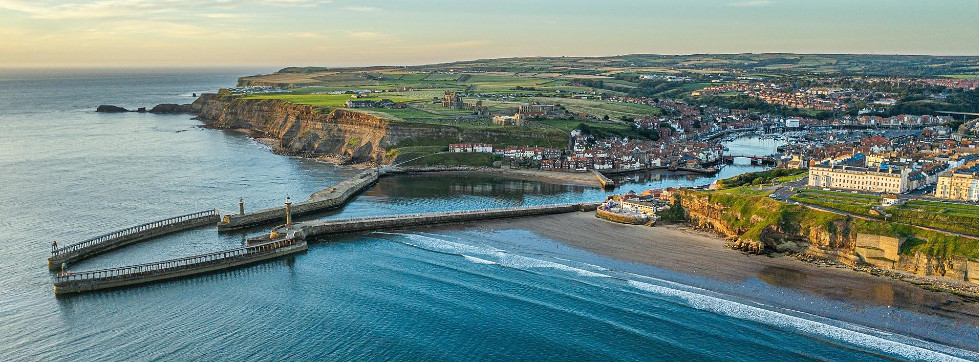

This term our topic is “Coastline”. Throughout this topic, we will learn about the human and physical features of the coastal regions across the United Kingdom, including a detailed case study about Whitby, in Yorkshire.
To find out more, view our Coastline Knowledge Organiser.
Other helpful documents
Coastline Optional Home Learning Tasks
(Please refer to the Downloadable Resources Page for PDF copies of all highlighted/underlined documents)
From a geographical perspective, we will learn about the oceans and seas that surround the United Kingdom; use maps, globes and atlases; learn about the world’s seas and oceans; learn about human and physical features of the coast; learn to use locational language; understand compass directions; discover physical processes such as erosion; and physical changes over time.
Although our topic is mainly a geography focus, we will be looking at two historical aspects around coasts and they are: jobs in the past and significant people – Captain Cook.
Reading
Our Class Text and Comprehension
In term 3, our reading comprehension lessons will be based upon our class text, “Katie Morag and the New Pier” by Mairi Hedderwick. Throughout this fiction text, we will join Katie Morag and her family explore the new pier that has been built in their coastal town. Everyone is ecstatic about the pier other than one face on the island who doesn’t seem so keen…
In term 4, our reading comprehension will be based upon another fiction text called “The Lighthouse Keeper’s Lunch” by Ronda and David Armitage. This story is about a lighthouse keeper called Mr Grinling. He lives in a beautiful white cottage on top of cliffs that are extremely high. He enjoys tucking in to his delicious lunch that his wife makes for him, but he’s not the only one who enjoys his lunch. The seagulls do too!
In term 4, we will also be looking at poems based around Easter for our class assembly.
To find out more about this text, view our Katie Morag and the New Pier Knowledge Organiser.
For further information about the reading skills we will focus upon this term, please view “Darwin Sequential Reading Curriculum”
Independent Reading
In class, we will continue to use the Accelerated Reader program. For further information about this, please view a Parent's Guide to Accelerated Reader.(https://help.renlearn.co.uk/AR/ARParentGuide) If you need your child's AR password, please contact me (Miss Lett).
Writing
Over the course of the term, we will be writing a description; adventure narratives; non-chronological reports; and persuasive writing.
Firstly, we will write a coastal themed description. Writing descriptions are always a great way to use amazing adjectives, noun phrases and a range of punctuation to set the scene. We will also focus on using the past tense consistently.
We will also write an adventure narrative which teaches children all about how to structure a story whilst using amazing vocabulary to keep everyone on their toes. Our adventure narrative will be written in first person about a sea rescue.
Furthermore, we will be writing a non-chronological report about Whitby in Yorkshire. We will be learning how to organize information into sections with sub-headings and using commas in a list.
In term 4, we will have a go at rewriting the story of, “The Lighthouse Keeper’s Lunch” and write a newspaper report about a lost lunch! We will use story maps to help us.
Grammar, Punctuation and Spelling
Punctuation
This term we will learn to use a comma in a list; identify where full stops and capital letters go; and will learn to use apostrophes for contraction.
Grammar
Over the next two terms, we will learn to continue to work on adjectives and nouns; introduce verbs in context; distinguish the difference between facts and fiction; use conjunctions to join sentences; introduce “ly” words; independently; and irregular past tense verbs. We will have a big focus on reading back our work to ensure it makes sense grammatically. We will also look at expanded noun phrases and prepositions to expand our work.
Spellings
During our spelling lessons this term, we revisit “-ing” and “-er” words; talk about syllables; spell words ending in “y”; continue to build on “wh” words; spell the days of the week accurately; common expectation words; numbers one to ten; practise plurals with “s” and “-es”; introduce third person verbs such as: he sings, she plays; and revise “split diagraphs”.
To view our weekly breakdown of our spellings, please view our Term 3 and Term 4 Homework Grid.
In addition to these weekly spelling rules, we will continue to learn and spell words from the Year 2 spelling list. For an overview of these spellings, please view the Spelling word list for Year 2
Following the White Rose Maths scheme, Year 2 will cover four main blocks of learning over the course of the spring term: number (including the four operations); statistics; geometry; and measurement. As part of the White Rose Maths scheme, each block is broken down into a series of small learning steps. Combined, these small learning steps then cover all the curriculum content your child needs to know in small related chunks.
This term’s small learning steps for each block
| Maths area of learning | Block | Small Learning Steps |
| Number | Place Value | |
| Number | Addition and subtraction | |
| Number | Multiplication and division | Recognise equal groups; make equal groups; add equal groups; introduce the multiplication symbol; multiplication sentences; using arrays; make equal groups – grouping; make equal groups - sharing; the 2 times tables; doubling and halving; odd and even numbers; the 10 times tables; divide by 10; the 5 times tables; and divide by 5. |
| Statistics | ||
| Geometry | Shape | |
| Geometry | Position and direction | |
| Measurement | Money | Count money in pence; count money in pounds; choose notes and coins; make the same amount; compare amounts of money; calculate with money; make a pound; find change; and two step problems. |
| Measurement | Length and height | Measure in centimetres; measure in metres; order length and height; and four operations with length and height. |
| Measurement | Mass, capacity and temperature | Compare mass; measure in grams; measure in kilograms; four operations with mass; compare volume; measure in millimetres; measure in metres; four operations with volume and capacity; and temperature. |
| Measurement | Time |
One of the most important things for your child to have mastered and maintain is their knowledge of times tables. For an overview of our weekly times tables focus, please view our Term 3 and Term 4 Homework Grid.
Our Calculation Policy: addition and subtraction
Our Calculation Policy: multiplication and division
In term 3 our topic is “Uses of Material”. Throughout this topic we will find out about different materials, how they move and if they change shape. We will learn to make predictions, carry out experiments and then draw or write up the results.
Uses of Materials Lesson Overview
| Lesson | Learning focus |
| 1 | Exploring every day materials |
| 2 | Shaping materials |
| 3 | Bending, stretching, twisting and squashing |
| 4 | Linking properties to uses |
| 5 | Testing paper |
| 6 | The problem with material |
To find out more, view our Use of Material Knowledge Organiser, Glossary and Vocabulary Mat.
In term 4 our topic is “Plant Survival”. Throughout this topic we will look at the growth of plants from seeds and bulbs. We will observe the growth of plants firsthand, recording changes over time and identifying what plants need to grow and stay healthy.
| Lesson | Learning focus |
| 1 and 2 | Exploring seasonal plants |
| 3 | Germination investigation |
| 4 | Where do plants like to grow? |
| 5 | What do plants need to grow? |
| 6 | Unusual plants |
To find out more, view our Plant Survival Knowledge Organiser, Glossary and Vocabulary Mat.
Art: Flowerhead
Our art topic for term 3 is “Flowerhead”. Throughout this topic, we will learn about the significant artist - Yayoi Kusama and focus on skills such as: drawing; exploring visual elements; printmaking and; 3d forms.
To find out more, view our Flowerhead Knowledge Organiser.
Design and Technology: Beach Huts
Linking closely to our topic this spring, our unit in DT for term 4 is “Beach Huts”. We will learn about structures with a particular focus on strengthening and joining through various materials.
To find out more, view our Beach Huts Knowledge Organiser.
Route Explorers
This unit allows children to code using the tool, 2Go. Children learn to build simple algorithms to move a screen turtle along routes. They consider direction and distances and create commands.
Key Learning
- To use the direction keys in 2Go to move the turtle along a route.
- To use units of distance along with the direction keys in 2Go to move along a route.
- To write instructions to complete more than one step of a route at once.
- To build up instructions for a longer route.
Questioning
In this unit, children will explore how to ask questions to collect useful information. They will learn to organise data using tally charts, pictograms, and simple branching databases to help sort and identify objects.
Key Learning
- To understand how data can be used to help answer a question.
- To ask an appropriate question, gather data using a tally chart and present it using digital tools.
- To begin to explore how yes or no questions can be used to sort data.
- To understand how branching databases work and practise navigating them to find answers.
Coding
This unit builds on the coding skills and knowledge from Year 1. Children will explore, modify and create programs that includes the use of timers and button objects. They will build on their testing and debugging skills to ensure programs work as expected.
Key Learning
- To create a computer program using an algorithm.
- To understand ways that the collision detection event can be used in a program.
- To design a program that follows a timed sequence.
- To understand that different objects have different attributes (properties).
- To understand the function of button objects in a program.
- To understand the importance of testing and debugging.
To find out more, view our Computing Knowledge Organisers.
Term 3: Sikhism – Anand Kuraj
Over the course of this term we will be learning how Sikhs explore love through their weddings, which are known as “Anand Karaj”. First of all we will share our current knowledge of Weddings that we may have celebrated so we can progress our knowledge of weddings in another religion. We will cover: why weddings are special; why we make promises; Sikh weddings; working as one in a team; exploring love; and create invitations to a Sikh wedding.
Term 4: Judaism – Hanukkah
Hanukkah is the Jewish Festival of Lights. The festival celebrates the victory of Judah Maccabee and his Jewish followers over the Syrian Emperor Antiochus and the miracle of the lamp, which burned for eight days in the regained temple in Jerusalem, even though there was only enough oil for one day's light. Over the course of the term Darwin will look at the importance of lighting candles; Hanukkah stories; Menorah; Dreidel; Hanukkah tradition; and Exploring Miracles.
To find out more, view our Anand Kuraj and Hanukkah Glossaries.
Term 3: Dreams and Goals
In this Puzzle, the children explore setting realistic goals and how they can achieve them. They discuss perseverance when they find things difficult as well as recognising their strengths as a learner. The children consider group work and reflect on with whom they work well and with whom they don’t. They also reflect on sharing success with other people.
Term 4: Healthy Me
In this Puzzle, the children learn about healthy food; they talk about having a healthy relationship with food and making healthy choices. The children consider what makes them feel relaxed and stressed. They learn about medicines, how they work and how to use them safely. The children make healthy snacks and discuss why they are good for their bodies.
To Find out more, view our Jigsaw knowledge and skills progression: Being Me In My World - Ages 6-7
Following the GetSet4PE scheme of learning, our Physical Education (PE) lessons for term 3 will focus on gymnastics and target games.
Our PE lessons for term 4 will focus on net and wall games (tennis) and ball skills. Our PE lessons will be on Mondays and Wednesdays; children can wear their PE into school on both of these days.
Gymnastics
In this unit pupils learn, explore and develop basic gymnastic actions on the floor and using apparatus. They develop gymnastic skills of jumping, rolling, balancing and travelling individually and in combination to create short sequences and movement phrases. Pupils develop an awareness of compositional devices when creating sequences to include the use of shapes, levels and directions. They learn to work safely with and around others and whilst using apparatus. Pupils are given opportunities to provide feedback to others and recognise elements of high-quality performance.
Target Games
Target games are games where players send an object towards a target. In this unit, pupils develop their understanding of the principles of defending and attacking for target games. They develop the skills of throwing, rolling and striking towards a target and are given opportunities to select and apply the appropriate action for the target considering the size and distance of the challenge. They will apply their skills individually, in pairs and in small groups and begin to organise and self-manage their own activities. They will understand the importance of abiding by rules to keep themselves and others safe, learn how to score points and use simple tactics.
Net and Wall
Net and wall games are games where either a net separates the players or a wall is used. The object is to hit the ball over the net and into the court space or against a wall to make it difficult for a partner to return. Examples include tennis, badminton, volleyball, squash. In this unit, pupils develop their understanding of attacking and defending principles in net games such as using a ready position to defend their court and placement of a ball into space. They use and develop skills such as throwing, catching, tracking and hitting a ball. They learn how to score points and how to play to the rules. They work independently, with a partner and in a small group and begin to self-manage their own games, showing respect and kindness towards their teammates and opponents.
Ball Skills
In this unit pupils will develop their fundamental ball skills such as throwing, catching, rolling, hitting a target, dribbling with both hands and feet and kicking. They will look to perform these skills with increasing control and accuracy using co-ordination and balance. Pupils will have the opportunity to work independently, in pairs and small groups.
To Find out more, view our Physical Education knowledge Organiser
Term 3: Grandma Rap
This unit explores beat and rhythm work using crotchets and quavers. Beginning with on-the-spot actions, followed by stepping the durations, stick notation is introduced and pupils go on to create their own 4-beat patterns, which they will loop creating an accompaniment to perform the rap to. This unit also contains the second of three progression snapshots that will be returned to and developed in Term 3 to collect evidence of pupils’ progress.
Term 4: Orawa
Orawa (pronounced ‘Arva’) describes a huge river. As pupils listen to the music, they will imagine the journey of the river through Europe, and make decisions about the scenery and events it passes on its way. They will make a huge piece of art based on the river’s journey and then, borrowing ideas from the composer, invent new music using vocal chants and body percussion.
Trains
This unit is all about modes of transport and specifically train travel. Children will begin by listening and analysing four great pieces of music, each one describing a different vehicle. Then they will discover how composers use volume, speed, and rhythm in their music. Finally, they will create their own transport-inspired pieces.
To Find out more, view our Music Knowledge Organisers
| Darwin Class Term 3 and 4 Resources (Year 2) |
| Title |
|---|
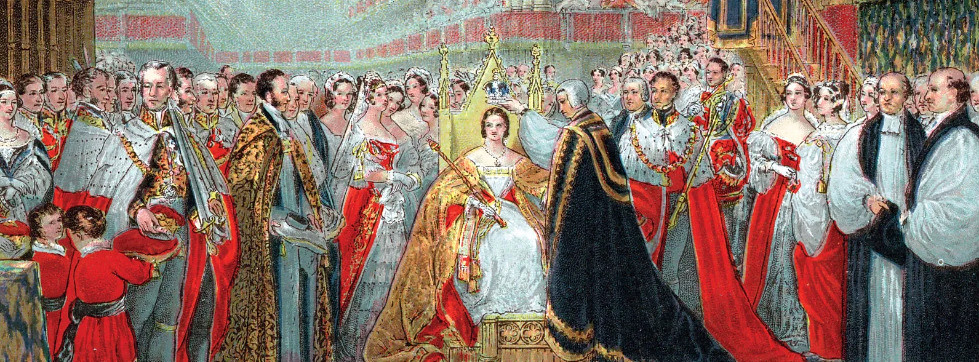

This term our topic is “Magnificent Monarchs”. This project teaches children about the English and British monarchy from AD 871 to the present day. Using timelines, information about royal palaces, portraits and other historical sources, children will build up an understanding of the monarchs and then research six of the most significant sovereigns.
In our geography unit this term, Darwin will be studying, 'Let's Explore the World'. The children will be looking at our local area as well as places on a national level and global levels. Children will learn how to: use an atlas; read a map key; read compass directions; read a globe with different hemispheres and so much more! Children will learn that we can present data in various ways such as: tables; graphs and various charts.
From a historical perspective, we will learn about the English and British Monarch from 871AD up to the present day. We will focus on timelines of important events that haven taken place across the UK. We will also learn about
- William the Conquer.
- King Henry VIII.
- Elizabeth I.
- Queen Victoria.
- Queen Elizabeth II.
We will also be looking at the significant impact these monarchs have had on the present day.
Our Class Text and Comprehension
In term 5, our reading comprehension lessons will be based upon our class text, “Queen Victoria’s Bathing Machine” by Gloria Whelan. Throughout this fiction text, we will learn about how Queen Victoria loved water but was too embarrassed to make her way to the water as Royalty are too regal to be seen in a swimsuit!
In term 6, we will be looking at Kennings Poems.
To find out more about this text, view our Queen Victoria’s Bathing Machine Knowledge Organiser.
For further information about the reading skills we will focus upon this term, please view “Darwin’s Sequential Reading Curriculum”
Independent Reading
In class, we will continue to use the Accelerated Reader program. For further information about this, please view a Parent's Guide to Accelerated Reader. (https://help.renlearn.co.uk/AR/ARParentGuide) If you need your child's AR password, please contact me (Miss Lett).
Writing
Over the course of the two terms, we will be writing: information leaflets, our own Kennings poems, descriptions of castles; and comic strips.
Firstly, we will write an information leaflet about Hampton Court Palace. The children will focus on their adjectives. and use expanded noun phrases to assist with this.
We will then write our very out kennings poems about famous monarchs. The grammatical focus for this piece will be turning verbs and nouns into compound nouns.
Then we will write a description of a castle using prepositional language and expanded noun phrases.
Finally, we will write comic strips about a particular Monarch and tell a narrative through humorous captions. Our focus will be using facts we have learnt.
Grammar, Punctuation and Spelling
Punctuation
This term we will ensure capital letters and full stops are used frequently in our writing; use a full range of punctuation such as a question mark and an exclamation mark; revise commas in a list; and introduce apostrophes for possession.
Grammar
Over the next two terms, we will learn to identify word classes in sentences; use complex adjectives to describe; revisit the four main sentence types; revisit tenses; use adverbs; and consolidate and use conjunctions independently.
Spellings
During our spelling lessons over the next two terms, we will revisit diagraphs and trigraphs; revisit compound words; introduce ‘k’ for the beginning of words; revisit ph and wh words; and look at pseudo words.
To view our weekly breakdown of our spellings, please view our Term 5 and Term 6 Homework Grid.
In addition to these weekly spelling rules, we will continue to learn and spell words from the Year 5 and 6 statutory spelling list.
For an overview of these spellings, please view the Spelling word list for Term 5 and 6.
Following the White Rose Maths scheme, Year 2 will cover four main blocks of learning over the course of the summer term: number (including the four operations); measure; statistics; and geometry. As part of the White Rose Maths scheme, each block is broken down into a series of small learning steps. Combined, these small learning steps then cover all the curriculum content your child needs to know in small related chunks.
This term’s small learning steps for each block
| Maths area of learning | Block | Small Learning Steps |
| Number | Place Value | |
| Number | Addition and subtraction | |
| Number | Multiplication and division | |
| Number | Fractions | Introduction to parts and wholes; equal and unequal parts; recognise a half; find a half; recognise a quarter; find a quarter; recognise a third; find a third; find the whole; unit fractions; non-unit fractions; recognise the equivalence of a half and two quarters; recognise three-quarters; find three quarters; and count in fractions to a whole. |
| Statistics | Statistics | Make tally charts; tables; block diagrams; draw pictograms; and interpret pictograms. |
| Geometry | Shape | |
| Geometry | Position and direction | Language of position; describe movement; describe turns; describe movements and turns; and shape with patterns. |
| Measurement | Money | |
| Measurement | Length and height | |
| Measurement | Mass, capacity and temperature | |
| Measurement | Time | O’clock and half past; quarter past and quarter to; tell the time past the hour; tell the time to the hour; minutes in an hour; and hours in a day. |
One of the most important things for your child to have mastered and maintain is their knowledge of times tables.
For an overview of our weekly times tables focus, please view our Term 5 and Term 6 Homework Grid.
Our Calculation Policy: addition and subtraction
Our Calculation Policy: multiplication and division
In term 5 and 6 our topic is “Animal Survival”. Throughout this topic we will find out about growth in animals by exploring the life cycles of some familiar animals. They build on learning about the survival of humans by identifying the basic needs of animals for survival, including food, water, air and shelter.
Animal Survival Lesson Overview
| Lesson | Learning focus |
| 1 | Habitats |
| 2 | Invertebrates |
| 3 | Microhabitats |
| 4 | Animal needs |
| 5 | Microhabitat food chains |
| 6 | Human impacts |
| 7 | Life process of reproduction |
| 8 | Life cycles |
| 9 | Exploring and observing insect life cycles |
| 10 | Seasonal changes |
To find out more, view our Animal Surival Knowledge Organiser.
Art: Portraits and Poses
Our art topic for term 5 is “Portraits and Poses”. Throughout this topic, we will learn about portraiture. Children will analyse portraits of Tudor Monarchs and compare these to selfies today. We will create our own portraits.
To find out more, view our Portraits and Poses Knowledge Organiser.
Design and Technology: Cut, Stitch and Join
Our project in term 5 teaches children about fabric home products and the significant British brand Cath Kidston. They learn about sewing patterns and using a running stitch and embellishments before making a sewn bag tag.
To find out more, view our Cut, Stitch and Join Knowledge Organiser.
Presenting Ideas
In this unit, children will learn how to present ideas using the concept mapping tool, 2Connect. They will organise information using the features of a concept map, and think about how to present their thoughts clearly to an audience.
Key Learning
- To understand that ideas can be organised and presented using a concept map.
- To add information to a concept map.
- To organise ideas clearly in a concept map.
- To use a concept map to present ideas to others.
The Internet
This unit introduces children to the fundamentals of the internet, including its purpose, how we access it, and how to use it safely and effectively. Through engaging activities, learners will explore the roles of browsers and search engines, websites and webpages and develop the skills needed to search for and evaluate information online.
Key Learning
- To understand how the internet, the World Wide Web and a browser work together.
- To understand the different types of hardware used to access the internet and their functions.
- To understand the difference between a website and a webpage and use a school website to find information.
- To understand the difference between a browser and a search engine, and to practise searching for information safely.
To find out more, view our Computing Knowledge Organisers.
Term 5: Islam - Jumu'ah
In Term 5 children will learn how Jumu’ah are Friday prayers. Before Jumu’ah, many Muslims wash, put on perfume or aftershave and dress in clean clothes. Just after lunchtime, worshippers meet at the mosque to say special prayers and listen to a talk by the Imam. The importance of saying Friday prayers is mentioned in the Qur’an and Muhammad called Friday the best day.
Term 6: Buddhism - Losar
Over the course of Term 6 the children will learn about the Tibetan Buddhist New Year holiday, Losar, which starts on the first day of the first month of the Tibetan calendar, which is usually in February.
The celebrations last between three and 15 days and are a mixture of early Bon traditions and later Buddhist traditions. Tibetan Buddhists may perform rituals and dances to ward off evil spirits, present offerings to Buddha's shrine and hang up new prayer flags during Losar. Losar is also a family time when people clean their houses, wear new clothes, come together to eat, share in the traditions of the festival and spend time together.
To find out more, view our Knowledge Organisers.
Term 5: Relationships
In this Puzzle, the children will learn about relationships we have with our household family members, extended family members and friends. Children will learn that you can have different types of relationships and these may differ. We will teach the children how to support family and friends if they are feeling sad and will learn what it means to trust one another.
Term 4: Changing Me
In this Puzzle children look at different life cycles in nature including that of humans. They reflect on the changes that occur between baby; toddler; child; teenager; adult; and old -age. Within this, children also discuss how independence, freedoms and responsibility can increase with age. As part of a school’s safeguarding duty, pupils are re-taught the correct words for private parts of the body. They are also reminded that nobody has the right to hurt these parts of the body, including a lesson on inappropriate touch and assertiveness. Children practise a range of strategies for managing feelings and emotions. They are also taught where they can get help if worried or frightened.
Following the GetSet4PE scheme of learning, our Physical Education (PE) lessons for term 5 and 6 our focus will be on athletics, sending and receiving, striking and fielding (cricket and rounders), and team building.
Athletics
In this unit, pupils will develop skills required in athletic activities such as running at different speeds, jumping and throwing. In all athletic based activities, pupils will engage in performing skills and measuring performance, competing to improve on their own score and against others. They are given opportunities to work collaboratively as well as independently. They learn how to improve by identifying areas of strength as well as areas to develop.
Sending and Receiving
In this unit, pupils will develop skills required for sports that include throwing, passing, kicking the ball and how to receive the ball ready to successfully continue to play on in a match of some sort. Children will look at how to be quick on their feet and a lot at their body language to ensure they are ready to receive a ball and ready to send it off to their team mate.
Striking and Fielding
In this unit, pupils develop their understanding of the principles of striking and fielding games. They develop the skills of throwing and catching, tracking and retrieving a ball and striking a ball. They begin to self-manage small sided games. Pupils learn how to score points and play to the rules. Pupils will begin to think about how to use skills, strategies and tactics to outwit the opposition appropriate to the situation.
Team Building
In this unit, pupils look at how to successfully build a rapport with team mates to ensure they get along and can complete a task successfully. Children will look at social skills as well as physical skills which will help them in a sports match.
Term 5: Swing Along with Shostakovich
Sing, swing, and sway your way through this unit on metre! Along the way, pupils will feel patterns of beats in their bodies, swinging in time with a partner and marking the beat using simple body percussion patterns. They will explore how beats are grouped and will devise their own body percussion patterns to demonstrate this. They will begin to identify different metres in familiar songs. Finally, the children will be invited to move freely and creatively to two pieces from Shostakovich’s Jazz suites, each in a different metre, using scarves, ribbons, cloths, or even old socks! This unit offers an excellent next step for pupils who have already established a strong sense of beat.
Charlie Chaplin
Film composing is an art form all of its own – different, and distinct from other forms of composition. Composers use moving images (and often story) to inspire, shape, and structure their ideas. In this unit, we will use a film by Charlie Chaplin to help us understand different musical elements.
Term 6: Tańczymy labada
This unit is based around a welcoming Polish circle game with increasingly tricky actions, which will help to develop children’s sense of beat and encourage cooperative play. As well as learning to sing confidently in another language, children will learn to play singing games, play an accompaniment, and invent a 4-beat body percussion pattern. Additionally, they will learn about traditional dances of Poland and plan and rehearse a performance for younger children. This unit also contains the final of three progression snapshots to collect evidence of pupils’ progress.
For more information, please view our Sing Up year 2 knowledge organisers
| Darwin Class Term 5 and 6 Resources |
| Title |
|---|